Your FYP is not a licensed esthetician. We are.
If your skincare routine has been quietly curated by TikTok, you’re not alone. Millions of people have overhauled their bathroom shelves based on a 60-second video from someone with great lighting and a ring light. Some of those tips are genuinely solid. Others are not. And a few are actively making your skin worse while you wait for results that are never coming, or worse still, actually dangerous.
At Spa Bella Medispa, we see the aftermath every day. Clients come in with barrier damage from over-exfoliation, DIY burns from at-home peels, and a lot of confusion about why their 14-step routine isn’t doing anything. So let’s cut through the noise.
Here’s our honest breakdown of what’s trending on TikTok, and what’s actually worth your time.
The Ones That Are…Fine (But Overhyped)
Slugging
Slugging, for the uninitiated, is the practice of slathering your face in Vaseline or Aquaphor as the last step of your nighttime routine to “seal in” moisture. It went massively viral and spawned a thousand “skin barrier repair” videos.
Is it harmful? For most people, no. Is it the miracle it’s made out to be? Also no. Occlusives like petroleum jelly don’t add moisture; they just prevent water loss. If your skin is already dry and damaged, you’re essentially sealing in the problem. And if you’re acne-prone, you may be sealing in trouble.
The better play: a good moisturizer with humectants (like hyaluronic acid) and emollients does the same job more intelligently. Or, if your barrier is genuinely compromised, talk to us about what’s actually causing it.
Ice Rolling
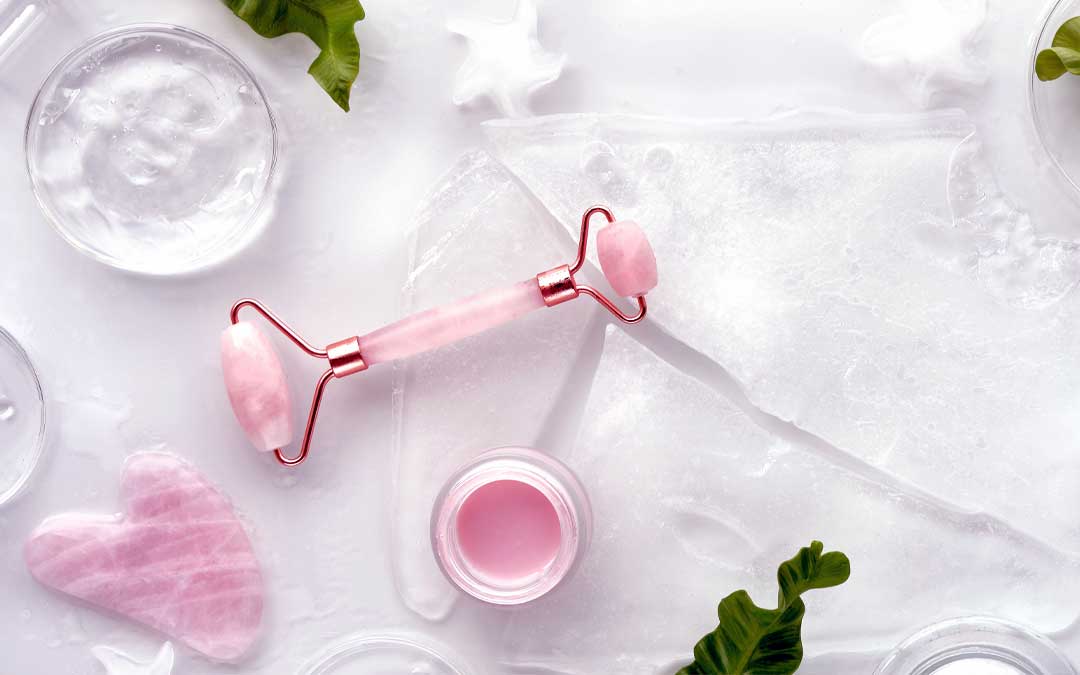
Cold tools have had a serious moment. Ice rollers, frozen globes, cryo sticks — the idea is that cold temperatures reduce puffiness, tighten pores, and give you that “snatched” morning look.
Here’s the truth: cold constricts blood vessels temporarily, which can briefly reduce puffiness and make skin look a little firmer. But pores don’t actually open and close in response to temperature. That’s a skincare myth that refuses to die. And whatever “tightening” you see fades within an hour.
It’s not harmful. It can feel great, especially first thing in the morning. But if you’re hoping it’s doing anything structural for your skin, it isn’t.
Gua Sha
Gua sha has ancient roots and a very aesthetic TikTok presence. The claimed benefits range from lymphatic drainage to facial slimming to jawline definition.
Realistically, it can help with temporary depuffing and improve circulation. Done correctly, it’s a pleasant addition to a routine. Done aggressively (as many TikTok tutorials encourage), it can cause bruising, broken capillaries, and irritation. The “sculpted” results people are filming are largely water movement, not fat or bone structure changing. Manage your expectations accordingly.
The Ones That Are Actually Risky
DIY Dermaplaning
This one makes us wince. Dermaplaning is a legitimate professional treatment that uses a sterile surgical scalpel to remove dead skin cells and vellus hair from the face. In trained hands, it produces a genuinely smooth, radiant result.
TikTok turned it into a $12 razor tutorial.
The problem is not the concept; it’s the execution. At-home dermaplaning tools are not surgical grade, the angle and pressure require training to get right, and nicks, cuts, and irritation are common among beginners. Worse, if you have active acne, rosacea, or certain skin conditions, dermaplaning can spread bacteria or trigger a flare. Done incorrectly, you can also over-exfoliate and compromise your skin barrier in ways that take weeks to repair.
If dermaplaning appeals to you (and it should, it’s a great treatment), come get it done right.
At-Home Chemical Peels
High-strength acids have migrated from professional treatment rooms to Amazon shopping carts, and it is not going well for a lot of people. TikTok is full of videos showing people applying 30% glycolic acid or TCA solutions at home, often following instructions from other non-professionals.
Chemical peels require an understanding of skin type, condition, pH, application time, and contraindications. Applied incorrectly, they can cause chemical burns, post-inflammatory hyperpigmentation, and long-term sensitivity. We’ve seen clients come in with damage from at-home peels that required months of recovery before we could do anything corrective.
The strength of a peel is not the only variable. The skill of the person applying it matters enormously.
Microneedling Rollers
Dermarollers became a TikTok staple with the promise of collagen stimulation and product absorption at home. And yes, needles do create micro-channels in the skin. That’s also the problem.
At-home rollers are not sterile after the first use, the needle depth is inconsistent, and most people are rolling too aggressively, too often. The result is chronic low-grade inflammation, not collagen production. There’s also a real infection risk if devices aren’t replaced frequently (and they’re almost never replaced frequently enough).
Clinical microneedling at a med spa uses sterile, single-use cartridges with controlled depth, speed, and pressure. It’s not the same treatment. It’s not even close.
What Actually Works (And That You Won’t Find on TikTok)
Here’s what rarely goes viral, because it doesn’t make for great short-form content: consistent, professional treatment over time.
The results people are chasing with ice rollers and gua sha and DIY peels — smoother texture, smaller-looking pores, even tone, genuine glow — those are the outcomes of treatments like DiamondGlow, microneedling, BBL/IPL, and chemical peels done in a clinical setting by people who have been trained to read your skin and adjust in real time.
None of those things photograph as dramatically in a 30-second before-and-after. But they work. And they keep working, because professional treatments create actual change in the skin rather than temporary visual effects.
That’s not a knock on at-home skincare. A good daily routine matters, and there are genuinely effective products available without a prescription. But the ceiling of what you can achieve at home is much lower than TikTok wants you to believe, and the floor of what can go wrong is much lower too.
The Bottom Line
TikTok has done something useful: it got a whole generation genuinely interested in skincare. The curiosity is good. The DIY escalation is where it gets dicey.
Use social media to discover what’s out there. Come to us to find out what’s right for your skin specifically, how to get there safely, and what’s actually going to make a difference you can see in the mirror, not just on camera.
We’re booking now. Your FYP will still be there when you get back.
Spa Bella Medispa is Denver’s leading medical spa, located at 1685 S Colorado Blvd, Suite C. Call us at (303) 512-9000 or book online.